Choosing the right trading platform API is the single biggest factor in how fast you launch and how far you can grow. This guide covers key features, common pitfalls, and a simple path to get started.
So you're building something new in fintech. Maybe you're an independent software vendor trying to get a product to market before the competition. Or you're at an institution that needs a trading platform API that can handle serious volume without breaking a sweat. The choice you make here? It's probably the single biggest factor in how fast you launch and how far you can grow.
Let's be real. Picking the right API isn't just about ticking boxes on a feature list. It's about finding a partner that moves as fast as you do and can scale when you hit that hockey-stick growth curve. I've seen too many projects stall because the API they chose couldn't keep up.
### Why the Right API Matters More Than You Think
Think of your trading platform API as the engine in a race car. You can have the flashiest chassis and the slickest paint job, but if the engine sputters under pressure, you're not winning any races. A solid API determines how quickly you can integrate new features, handle surges in user activity, and expand into new markets.
Here's what most people miss: it's not just about raw speed. It's about reliability and flexibility. An API that gives you clean, real-time data and lets you execute trades with minimal latency is a game-changer. But it also needs to be adaptable when your product roadmap shifts.

### Key Features to Look For in a Trading Platform API
Now, let's get practical. When you're evaluating options, here are the things I'd focus on first:
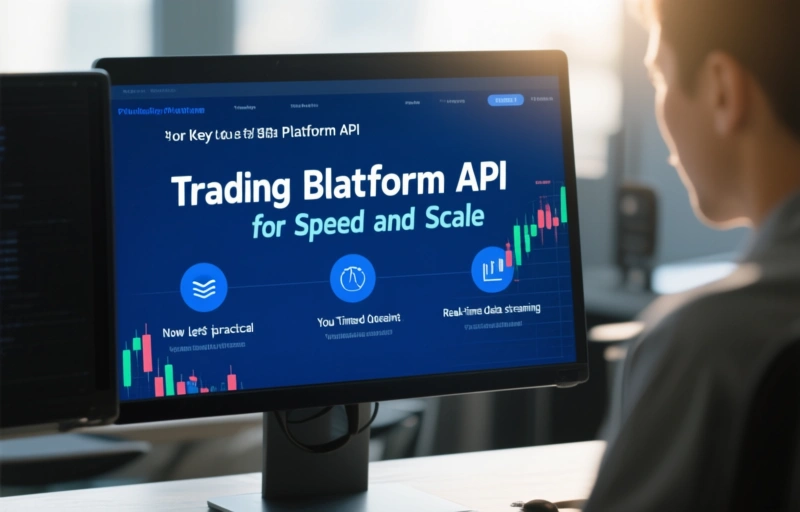
- **Real-time data streaming:** You need quotes and order book updates that arrive in milliseconds, not seconds. Any delay is money lost.
- **Low-latency execution:** Your API should let you place and cancel orders almost instantly. Look for round-trip times measured in microseconds.
- **Comprehensive order types:** Market, limit, stop-loss, and trailing stops are table stakes. Make sure the API supports the advanced order logic your users expect.
- **REST and WebSocket support:** REST is great for one-off queries and account management. WebSockets are essential for streaming live data without polling.
- **Clear documentation and SDKs:** Good docs save you weeks of frustration. Look for sample code in Python, JavaScript, and other common languages.
- **Scalability without rate limits that hurt:** Some APIs throttle you hard once you hit a certain volume. Find one that grows with you.
### Common Pitfalls and How to Avoid Them
I've talked to dozens of developers who made the same mistakes. Here's what to watch out for:
First, don't get seduced by a low price tag. A cheap API might save you money upfront, but if it goes down during a volatile trading day, you'll lose far more than you saved. Second, ignore the hype around "AI-powered" features unless they actually solve a real problem for your users. Most of the time, solid fundamentals beat flashy gimmicks.
Another big one: failing to test under load. Your API might work perfectly with 10 users, but what about 10,000? Run stress tests before you commit. Simulate real-world conditions, not just the happy path.
### How to Get Started Without Overwhelming Yourself
Starting with a new trading platform API doesn't have to be a headache. Here's a simple path:
1. **Read the documentation first.** Yes, actually read it. Look for a quickstart guide and a sample app.
2. **Set up a sandbox environment.** Most providers offer test servers. Use them to experiment without risking real money.
3. **Build a simple proof of concept.** Don't try to build your whole platform at once. Start with a single feature, like fetching a live price or placing a limit order.
4. **Iterate from there.** Once you've got the basics working, add complexity gradually.
### Final Thoughts
The right trading platform API is an investment in your product's future. It's not just about getting to market fast—it's about staying there and thriving. Take the time to evaluate your options carefully, and don't be afraid to ask tough questions before you sign up.
Remember, you're not just choosing a tool. You're choosing how your users will experience your platform every single day. Make it count.