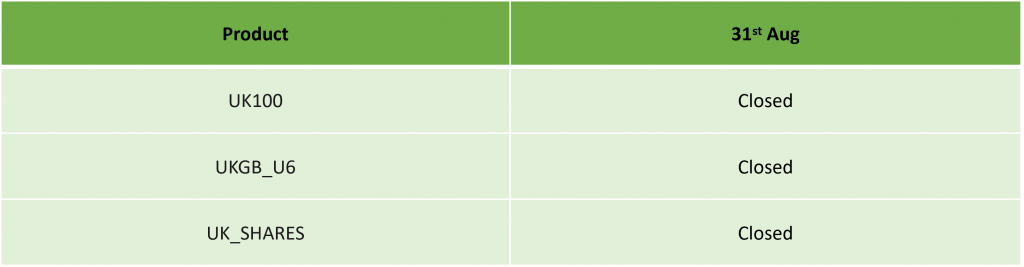
The UK August bank holiday on Monday, 31 August 2026, could impact your trading with thinner liquidity and wider spreads. Here's what to expect and how to adjust your strategy.
If you're actively trading U.S. markets, you probably don't think twice about a UK bank holiday. But here's the thing: the UK's summer bank holiday on Monday, August 31, 2026, can quietly shake up your trading day—even if you never touch a London-listed asset.
We've updated our trading schedule to reflect this holiday, and we want to make sure you're prepared for the thinner liquidity, wider spreads, and occasional price gaps that often come with it. Think of this as your heads-up so you can plan around the noise instead of getting caught in it.
### Why a UK Holiday Matters to You
You might be wondering: "I trade U.S. stocks and futures. Why should I care about a UK holiday?" Fair question. Here's the deal—global markets are interconnected. When UK traders step away, overall market depth takes a hit. That means fewer orders on the books, which can lead to:
- Wider bid-ask spreads on currency pairs and cross-listed stocks
- Sudden price jumps when liquidity thins out
- Slower execution during peak volatility windows
It's not just about London. The ripple effect can touch U.S. indices, commodities, and even crypto pairs that trade around the clock. So even if your strategy is purely U.S.-focused, you're not immune.
### The August 31, 2026, Schedule at a Glance
All times below are platform time (GMT+3). We've adjusted our normal hours to reflect the reduced participation. Here's what you need to know:
- **Forex pairs:** Expect normal opening but reduced liquidity throughout the session. Major pairs like EUR/USD and GBP/USD may see choppier moves.
- **Indices (UK100, Germany40, etc.):** These will be closed or have shortened hours, depending on the underlying exchange. Check your platform for specifics.
- **Commodities (including oil and gold):** Trading continues, but volume could dry up in the afternoon. That's when spreads tend to blow out.
- **U.S. equities and ETFs:** These remain open as usual, but don't be surprised if early-session volatility feels amplified.
Remember, these are general guidelines. Your specific instruments might have different rules, so always double-check the contract specs in your trading platform.
### How to Trade Smart on a Thin-Liquidity Day
Thin liquidity isn't necessarily bad—it can create opportunities if you know what you're doing. But it also amplifies risk. Here's how to keep yourself protected:
- **Cut your position sizes.** A 20% smaller position can save you from a nasty margin call if the market gaps against you.
- **Widen your stops.** Tight stops are more likely to get hit during illiquid periods. Give your trades room to breathe.
- **Avoid trading right around major news releases.** That's when spreads can spike to levels you've never seen before.
- **Keep an eye on your margin.** With dynamic leverage, your requirements can change without warning. Don't get caught off guard.
One more thing—don't assume the holiday ends at the close of the UK session. The effects can linger into Tuesday, especially if there's an overnight news event. So stay vigilant.
### The Bottom Line
A UK bank holiday might seem like a minor blip on your calendar, but it can have a real impact on your trading day. The key is preparation. Know the schedule, adjust your risk, and don't let thin liquidity turn a small move into a big loss.
If you have any questions about how this affects your specific trades, reach out to our support team. We're here to help you navigate these quieter days with confidence.
Happy trading, and stay safe out there.